AI has sparked a transformative shift in EdTech services, redefining the learning experience. Assessments are automated, saving time and providing immediate feedback.


Improved marketing and customer acquisition
EdTech companies can analyze user data to discover valuable trends and preferences. This insight allows them to design customized marketing strategies that connect with their target audience.

Enhanced student learning
AI and ML evaluate student data to detect patterns and knowledge gaps. This insight is used to personalize learning experiences. As a result, it leads to better learning outcomes and greater customer satisfaction.

Increased efficiency
AI solutions for EdTech simplify administrative tasks, such as grading and delivering feedback, resulting in major time and cost savings. This automation enables EdTech companies to grow their operations without hiring additional staff.

Competitive advantage
EdTech software development helps businesses achieve a competitive advantage by utilizing AI and ML. This results in increased revenue and a greater market share as they deliver innovative solutions that produce superior educational outcomes.

Improved product development
AI services for EdTech examine data for informed product development. Improvement helps Edtech companies create products that better meet the needs of their customers.

Improved student retention
With AI and ML, EdTech platforms can tailor learning experiences for individual students. Personalization can enhance their engagement and decrease the chances of dropping out. This improved retention increases revenue for EdTech companies.

Intelligent Content Creation
Students who have hearing difficulties or prefer reading instead of listening to lectures can more easily access learning material through customized AI transcription and text-to-speech technology.

Intelligent Writing Assistants
These tools apply natural language processing (NLP) and machine learning algorithms to evaluate the text and deliver real-time feedback and suggestions to users.

Predictive Analytics
AI tools enable teachers to analyze student data, including grades, attendance, and behavior, to identify patterns and trends that may indicate a student is struggling and needs additional support.
Intelligent Content Creation
Students who may have hearing issues or prefer to read rather than listen to lectures may find it easier to access instructional content with customized Al transcription and text-to-speech technology.
Intelligent Writing Assistants
These tools utilize natural language processing (NLP) and machine learning algorithms to examine the text and deliver real-time feedback and suggestions to users.
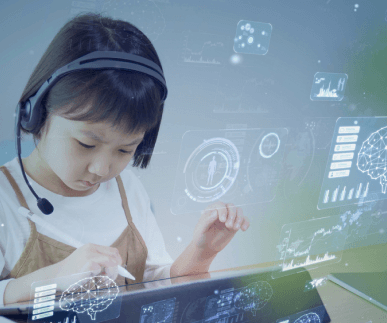
Intelligent Tutoring Systems
Using machine learning algorithms, ITS delivers personalized EdTech solutions that address each student's specific needs, interests, and abilities.

12+ Years of Experience
With extensive experience in AI development and deployment, we have a proven track record of delivering successful solutions tailored to your business’s AI requirements.

Human-Focused
We focus on nurturing our employees’ growth and development, fostering a dedicated and motivated team committed to providing top-quality AI solutions for your business.

Team of 200+ Experts
With a team of over 150 professionals, we bring diverse expertise and skills to support your business’s AI needs, comprehensive solutions to your requirements.

International Footprint
Our international footprint with offices in the world wide allows us to offer AI solutions and support making us an excellent choice for businesses.